

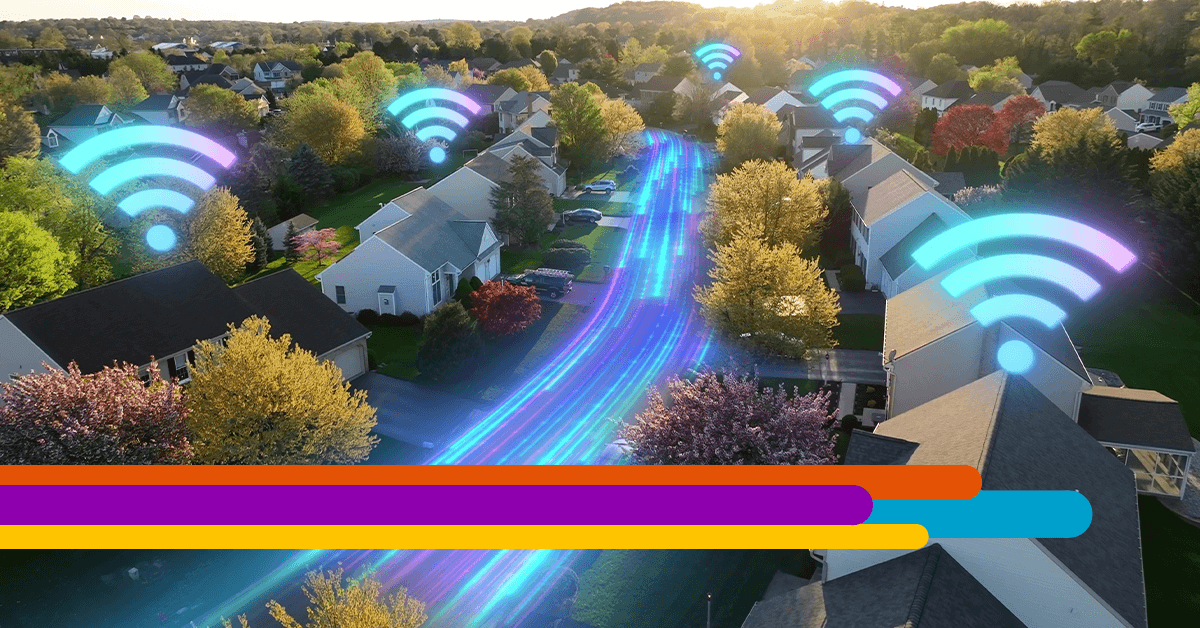
Each year, we continue to increase our dependence on data and the smart devices that can deliver it. Full-time remote working has become the norm for 35% of American workers who can do their jobs remotely, and our ways of relaxing often require a good internet service. Whether it's to video call friends, stream a movie or scroll on social media, it's more important than ever that you have internet in your home that suits your needs.
To get this ideal internet service, you need to understand what internet speeds are and how your internet habits affect your speed requirements.
What Does Internet Speed Mean?
Internet speed describes how fast data transfers between your device and the internet. The higher your internet speeds are, the faster data can transfer between the two. Internet speed is typically measured based on bandwidth and latency. Bandwidth is how much data can be transferred between your device and the source at one time. Latency describes how many milliseconds it takes for data to transfer from the source to the device and back again.
This data transfer speed determines what activities you'll be able to do online and to what extent, as insufficient internet speeds can cause lag, slow download or upload times and long loading times.
The internet speeds you receive will depend on many factors, but the type of service technology your provider uses and your service plan will be key. Some types of internet technology can provide faster speeds than others, and your internet service providers (ISPs) will usually offer different plans, with higher speeds costing more.
What Does Mbps Mean?
Internet speeds are usually given as megabits per second (Mbps) or gigabits per second (Gbps). The higher the Mbps or Gbps, the faster the internet speed is.
Mbps is what most service providers use since gigabit speeds aren't available from many providers. When comparing megabits and gigabits, one gigabit is equal to 1,000 megabits, and one megabit is equal to 1,024 kilobits.
Different Types of Internet Speed Explained
Some internet service technologies, such as fiber-optic, provide symmetrical speeds, which means download and upload speeds are the same. However, older cable and newer fixed wireless technologies deliver faster download speeds than upload speeds. This difference can negatively affect online activities that require high upload speeds, which is why services that offer symmetrical speeds are so attractive.
Download Speed
Download speed measures how fast data is sent from the internet to your device. Activities that download data and require sufficient download speeds include:
- Streaming videos.
- Scrolling on social media.
- Browsing websites.
- Streaming music.
- Downloading files.
If you don't have sufficient download speeds, you'll likely experience buffering, slow page loading and slow downloads.
Upload Speed
Upload speeds are the opposite of download speeds, and measure how fast your device sends data to the internet. Online activities that require data to be sent from your device to the internet include:
- Sending emails.
- Video calls.
- Gaming online.
- Livestreaming.
- Backing up files.
- Posting on social media.
Without strong upload speeds, your devices will struggle to send data, likely resulting in delays.
What Internet Speeds Do You Need?
Internet speed requirements will vary from one household to the next. However, today's common online activities mean that the minimum speeds you'll need are much higher than they were even a few years ago. Symmetrical speeds are more important, too.
Connected devices in the household have affected our speed requirements, too. As of 2023, the average American home has 17 connected devices. This rise is largely thanks to devices that previously didn't require an internet connection, such as thermostats, kitchen appliances and doorbells. Now, these devices are commonly designed with smart features that need a constant internet connection. Other devices such as smart home assistants, alarm systems, lighting and garage door openers also often connect online.
1-8 Gbps
With so many devices connected in even single-occupant residences, most households will need speeds of at least 1 Gbps, but perhaps as high as 8 Gbps, to reliably use multiple devices at once. With these speeds, you can enjoy common data-intensive activities, such as streaming or gaming, with uninterrupted data transfers.
500-1,000 Mbps
For some smaller households with fewer smart devices, speeds of 500-1,000 Mbps may be sufficient. At these speeds, you should be able to carry out low-data activities, such as online shopping or emailing, on multiple devices. However, if you simultaneously use multiple devices for activities that require a lot of data, you may experience buffering and data transfer delays.
What Factors Affect Internet Speed?
Your internet service is unlikely to deliver its top possible speeds at all times. However, some factors make it more likely that you'll experience slower internet speeds:
- Router location: Thick walls and the distance between your device and the router could affect the range and speed of your internet. Place your router in a central location within your home and away from walls to avoid this.
- Weather: Cloudy weather could affect some satellite internet services.
- Interference: Your neighbors' internet service may interfere with your own. To fix this, change your service channel.
- Congestion: Some internet services can experience delays during busy periods due to increased demand on infrastructure.
- Number of connected devices: The more devices you have connected to your internet, the less bandwidth there is for each device. When you have everything from computers and smartphones to fitness trackers and smart appliances, anything less than symmetrical service will leave you dissatisfied with your internet and these common household items.
Which Type of Internet Service Delivers the Best Speeds?
Each type of internet service technology has its pros and cons, plus different internet speed capabilities. However, the increasing number of connected devices in American homes has drastically changed the nature and standard of service that most Americans require.
Digital Subscriber Line (DSL)
DSL internet is one of the oldest internet services that's still commonly used. It delivers internet via copper telephone wires, meaning there can be some reliability issues, particularly if you live far from the provider's central office. At its best, a DSL service will deliver download speeds of 100 Mbps along with slower upload speeds. Most households will find this service insufficient for their needs.
Satellite
Satellite internet will usually deliver similar speeds, although some services may reach as high as 250 Mbps. However, cloudy weather or obstacles such as hills can interfere with the signal and affect speed consistency. Fixed wireless services can deliver speeds of up to 400 Mbps.
Fixed Wireless
Fixed wireless internet offers mid-range download speeds of up to 400 Mbps. With fast and affordable installation costs, it may appeal to those who want fast access to an internet service.
However, like most other services, fixed wireless doesn't deliver symmetrical speeds. Additionally, if you live in more rural areas, you may find that speeds are less reliable.
Cable
Cable internet is one of the fastest internet services. It uses the same infrastructure that you need for cable TV, and can deliver speeds of up to 2 Gbps. However, this service requires you to share bandwidth with other people in your local area, such as your neighbors. During peak hours when many people use the internet, you may experience slower speeds than usual.
Fiber-Optic
A fiber-optic service is arguably the best that money can buy. With FTTH top speeds of 8 Gbps or more, it can deliver speeds 100 times faster than a DSL service can and much faster than any other service type can provide. What's more, fiber-optic services are symmetrical and much better at handling the requirements of many connected devices in a home.
Fiber is also highly reliable since each household has its own dedicated fiber cable. This means that fiber users won't experience slower speeds at times of peak network activity. Users of other service types may find their internet speeds are slower when there's heightened online activity in their area.
Fast and Symmetrical Speeds With Fiber-Optic Internet
At i3 Broadband, we take pride in being a local business that excels in delivering exceptional customer service. From free installation services and tech visits to a rapid response to any query, we do whatever we can to ensure you enjoy every aspect of your fiber-optic internet service, including its unbelievably fast speeds. We also offer a 30-day money-back guarantee if you're not completely satisfied with your service.
To find out whether we're active in your area, search your address today.